Flag:
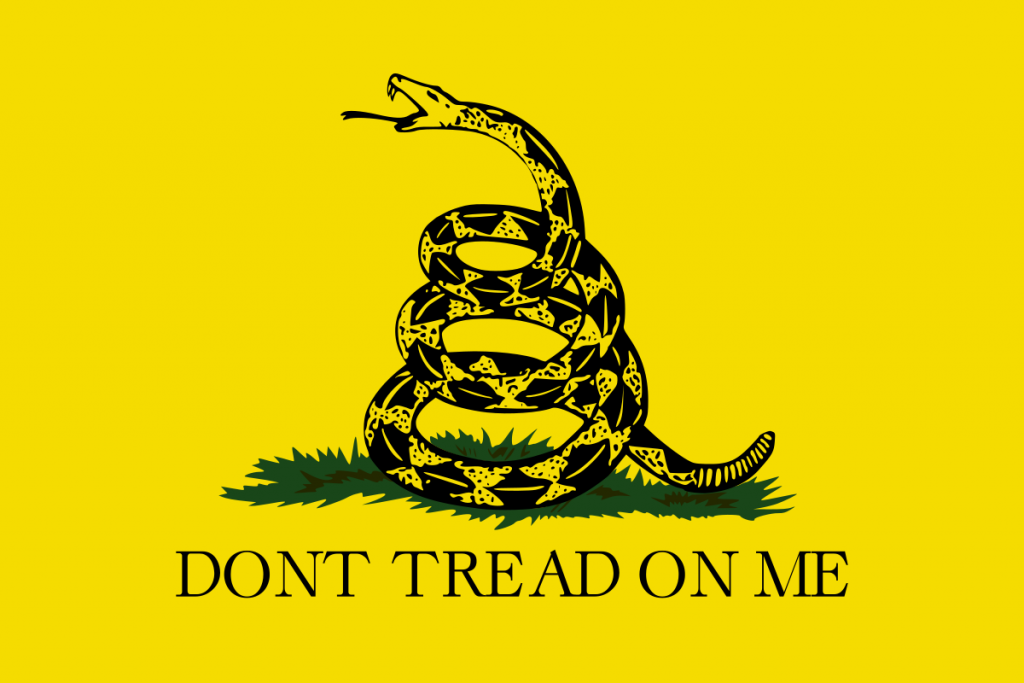
Nation Name (long): The Armed Republic of The 2nd amendment
Nation Name (short): The 2nd amendment
Population: fifteen million six hundred forty-five thousand (2025)
Total GDP: $2.709 trillion FDU
GDP per Capita: $66,456 FDU
Currency: Freedom Dollars United ($)
Demonym: 2nd amendmentians
Language: RedNeckalar
Species: Humans (only)
Religion: Majority Atheist
Capital: 9mm Central
Largest City: Firepower County
Government Type: Limited government libertarian republic
Leader(s): President Mc Freedom , Vice President Slot Arayan
Legislature: The President and his VP
Two-Letter Code: FD
Three-Letter Code: FDU
Motto: “Don’t tread on me.”
National Anthem: “9mm and 50 cal. blessed country.”
National Animal: The Rattlesnake
National Plant: Bindii (Soliva sessilis)
Historical Summary: The 2nd Amendment traces its origins to a group of Texans in the early 21st century who, disillusioned with the political climate of the United States, resolved to create a sovereign community beyond the reach of federal authority. Rather than attempting to secede within Texas, the group pooled resources to purchase abandoned Antarctic research stations, icebreakers, and surrounding territorial leases from private expeditions. Despite the Antarctic Treaty System’s ban on sovereign claims, the settlers declared independence and founded the Armed Republic of the 2nd Amendment.
Early conditions were severe. The settlers endured bitter cold, logistical breakdowns, and constant supply shortages. Survival required the construction of modular domes, geothermal power systems, and hydroponic agriculture. Uranium-rich deposits discovered beneath the ice eventually stabilized the economy, drawing new waves of migrants who sought liberty, property, and the right to live armed. Over several decades, the republic expanded its settlements until it claimed an area roughly equal in size to the state of Texas.
Geography and People
The 2nd Amendment covers an estimated 695,000 square kilometers of Antarctic territory, making it equivalent in size to Texas. Vast ice plains, rugged mountains, and subterranean resource sites define the geography. Most of the population of six million lives inside insulated urban domes connected by underground transit systems, though smaller frontier settlements persist on the fringes of the ice.
The symbolic national animal is the rattlesnake, a deliberate nod to the Texan origins of the republic. Although not native to Antarctica, it remains a prominent emblem on flags, military insignia, and commercial products.
Government and Law
Externally labeled a republic, the 2nd Amendment functions as a decentralized, market-based order. Property rights are absolute, and contracts serve as the supreme form of law. Firearm ownership is not merely permitted but is treated as a civic responsibility. The republic imposes no income taxes, relying instead on voluntary subscription models, private trusts, and defense associations to fund services such as education, courts, infrastructure, and disaster relief. Citizens may choose to subscribe to specific service providers or decline them entirely, embodying the principle of maximum personal choice.
Currency and Economy
The national economy produces an estimated 420 billion Bloods annually. The Blood is the official currency but circulates alongside cryptocurrencies, precious metal notes, and barter. Uranium mining provides the economic backbone, supplemented by information technology, engineering, hydroponic agriculture, and a thriving soda industry that has become a cultural export. The average income is approximately 70,142 Bloods. While the wealthiest earn around eight times more than the poorest, land ownership, trade reputation, and militia service remain equally significant measures of social standing.
Security and Arms
Security in the 2nd Amendment is built upon universal access to firearms and a network of private militias. Police forces exist in limited capacity, intentionally underfunded to avoid centralized control. Private security firms and local defense groups enforce contracts and provide protection. Justice is often swift and public, with corruption and betrayal punished through exposure, shaming, and ceremonial floggings that function as legal deterrents rather than instruments of political repression. Guns are not fetishized but are regarded as essential tools for survival and sovereignty.
Culture and Society
The culture of the 2nd Amendment combines frontier pragmatism with irreverent individualism. Domed cities host cafés, artisan soda shops, and technology incubators alongside gun ranges and militia halls. Same-sex marriage and unconventional partnerships are legally recognized and socially normalized. Political misconduct is addressed through televised “reflections,” public reckonings where misbehavior is scrutinized and reputations dismantled. Digital culture thrives, with memes, gaming, and online commerce contributing to both entertainment and industry.
Religion and Ideology
Religion is tolerated but occupies a marginal role in daily life. The dominant civic philosophy is grounded in lawful ownership, voluntary association, and resistance to centralized authority. The 2nd Amendment rejects socialism, supranational treaties, and imperial governance, instead advocating for a world composed of independent communities trading and competing on equal terms.
Institutions and Public Goods
Education is a national priority despite the absence of state oversight. Private academies and subscription-based universities specialize in engineering, coding, logistics, and survival sciences, producing citizens equipped for both the Antarctic environment and global markets. Healthcare operates as a patchwork of private clinics, cooperative guilds, and combat-trained medics, while welfare is handled through voluntary charities and local associations. International aid is generally rejected, reflecting the republic’s ethos of self-reliance.
International Role
The 2nd Amendment is widely disputed under international law, as Antarctica is nominally protected from sovereignty claims. Nevertheless, the republic maintains active participation in the Continental Liberty Compact, a bloc of self-governing states that cooperate in defense and trade. Key exports include uranium, survival engineering expertise, private defense services, and high-grade soda products. Though its global rankings are generally low, the republic is consistently listed among the top producers of soda in the East Pacific, a point of national pride.
Challenges
Life in the 2nd Amendment is harsh and fraught with contradictions. The Antarctic environment demands constant technological innovation, and the republic’s sovereignty remains contested internationally. Inequality persists, and the reliance on private justice makes law enforcement costly for those unable to afford it. Environmental pressures threaten fragile ecosystems, while crime in certain settlements remains a persistent concern. Yet citizens broadly regard these trade-offs as the necessary price of liberty, property, and self-determination.
Overview
The Armed Republic of the 2nd Amendment represents one of the most unusual experiments in self-declared nationhood, combining libertarian ideals with the extreme conditions of the Antarctic frontier. Its supporters hail it as a functioning model of voluntary governance and armed independence, while critics argue it is unstable, exclusionary, and internationally untenable.
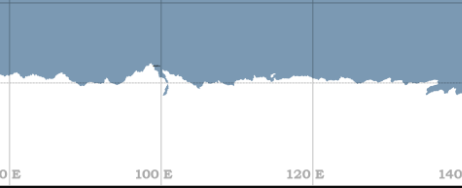
(80E to 140E)

