MBC


KEVATUUL: FIFTY YEARS ON

2 January 2025

Today marks the fiftieth anniversary of the single most devastating act of genocide the world has ever seen.

Kevatuul was a space-based nuclear weapons delivery system that was deployed in the fourth and penultimate year of the Auroran Imperial War by Noroist Axdel. Less than a year later on the 2nd of January 1975 it was ordered to strike the Ethalrian capital city of Ribenstadt, and with immense precision it killed an estimated 350,000 people, leaving millions of others injured and displaced. The people and the infrastructure of one of the most magnolious cities in the world was devastated in the blink of an eye. This unthinkable and barbaric use of weaponry is widely considered the most defining event in modern history; not only was it the most despicable eradication of a people in one fell swoop, but it has become infamous for how it defined a post-Kevatuul world.

Kevatuul orbited the globe for over four months before it became known by the Morstaybishlian cabinet. Up until this point the weaponisation of space had been the subject of science fiction and space operas. The public were not told of its existence and the Morstaybishlian government was frenzied to establish how they would deal with such an imminent threat of unfathomable wrath. Anticipating a strike on Sani Bursil that would bring Morstaybishlia to its knees within days, the royal family were quietly evacuated and the cabinet began convening in a secret location outside of the city. High Elderthane Ian Crowcasa authorised a covert strike team into the heart of the Kevatuul command centre which was discovered the previous day by Embertian intelligence. The special task force for this mission consisted of three brave men and two women who knew they were on a suicide mission into the heart of the Noroist war machine. When they arrived at the command center their attempted sabotage led to the breakdown of communication between the outpost and and Axdelian high command, and Captain Ñaaŕu effected the launch of Kevatuul on their own terms, believing that Ethalria was responsible and about to expel Axdel from the Ribenstadt Pact.

Kevatuul’s nuclear strike had a drastic impact on morale on both sides of the war. The devastation it wrought on Ribenstadt was realised immediately by both sides. Ethalria’s high command was obliterated by its own allies Axdel and its armed forces became factionalised and was unable to effectively reorganise. On the flip side, Morstaybishlia and her allies were paranoid that a second Kevatuul strike was imminent and news of Kevatuul swept the population into mass panic. Armies on both sides of the war became lame and the frontlines entered relative stagnation, with Morstaybishlia making only some ground.

The war crawled on for another six months before it formally ended, though fighting had been stagnant and some battlegrounds had not seen action for weeks. The world convened in Cynebury, Tretrid on the 14th of November 1975 and signed the Treaty Establishing Guidelines to Secure the Continued Peaceful Usage of Outer Space. It established the fundamental laws of space militarisation, exploration and sovereignty, and was signed by representatives of countries from around the world. Kevatuul has had an unintentionally profound impact on the functions of our modern world to this day.

It cannot be stated enough how important it is to remember the sheer destructive power of Kevatuul and the lives that were unjustly snuffed out of existence at its hand. It is nothing shy of mass murder, it is genocide in its most wanton form. It’s memory, however painful, must serve our world as a reminder of how close we can be at any one time to global extinction at the hands of the few who wield such power. It must be taught in schools around the world. Our children and their children must understand why we should never repeat this dark chapter of world history.

We must never forget.

Article written and published by Samminel Johannes.
2 Likes


BARVATA’S PLANS TO EXPAND THE UNAC

28 February 2025

The February 2025 UNAC summit concluded at noon, exploring a whole host of policy issues and other important topics of conversation between the 18 heads of government and heads of state representing their nations.

In his speech, which touched on Marislia, the rebuilding projects of the Ethalrias, investment into artificial intelligence, and nuclear energy, Franklin Barvata also announced to the summit that his government would actively seek to encourage the organisation to expand to include countries in Cereneria, a precedent he said was set in previous years with the Oan Isles and Jusdelva being member states, the latter by being a part of Great Morstaybishlia.

During the afternoon in Shimajiro, the Imperial Chancellor Sayuri Fugimura motioned to her government the intention to apply for entry into the UNAC. It marks a turn in foreign policy in Shimajiro that has likely aggravated the already weak coalition government.

3 Likes

DEATH OF A TITAN: VERLHANZ ROTHGERUS DIES AGED 104

15 June 2025


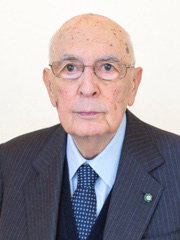
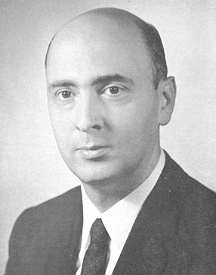
(Political portraits of Rothgerus in 1978 and 2024)

Verlhanz Benjamin Rothgerus, the former High Elderthane of Great Morstaybishlia and one of the most recognisable political figures of the 20th and 21st centuries has died at the age of 104 at his home in Frithcopse this morning.

Rothgerus was first elected to the Folk’s Hall in 1956, representing Frithcopse, Kuthernburg for 68 continuous years, the longest tenure in the history of Morstaybishlian parliamentary democracy. He led the Progress Party for 18 years between 1987 and 2005, and served as High Elderthane from 1998 to 2005, becoming the oldest person to assume the office at 77.

His premiership would preside over some of the most far-reaching constitutional reforms in living memory. Under his government, the Representation of the People Act 2000 lowered the voting age to 18, ended the practice of double-member constituencies and allowed the voting of all sentient species. His later reforms opened the Lord’s Hall to women and non-HECs for the first time in history, and allowed hereditary lords to disclaim their titles.

Rothgerus was a pioneer in social reforms. He legalised same-sex and interspecies marriage, radically expanded refugee programs especially in response to the Vekaiyun crisis, and pushed for multiculturalism. His administration also championed the beginning of what they called the ‘green transition’, launching the construction of 48 nuclear plants and introducing emissions reduction laws for businesses still reliant on coal.

Though his government faced criticism for economic mismanagement and labour unrest, Rothgerus is widely regarded as one of the architects of modern Morstaybishlia. Even after his high elderthaneship, Rothgerus refused a peerage, instead continuing to serve as a backbencher until his death. He became the first human centenarian member of the Folk’s Hall and was often described as the “Father of Reform” by both his political allies and opponents.

A state funeral is expected in Syllester Abbey in the coming days. The Progress Party has announced seven days of mourning. The High Elderthane Franklin Barvata has this to say:

“A reformer. A radical. A rival. A revolutionary. Rothgerus never stopped believing in the power of change. Whether you loved or loathed him, he changed this country forever.”

Verlhanz Rothgerus, 1920 - 2025. A titan of the chamber, an architect of the modern state.

3 Likes


FUJIMURA’S STATE VISIT TO GREAT MORSTAYBISHLIA

6 April 2025

Imperial Chancellor Sayuri Fujimura has made her first official state visit to Great Morstaybishlia today, arriving in Sani Bursil in the morning to meet with High Elderthane Franklin Barvata. The two leaders held bilateral talks at 1 Flarin Street, the official residence of the head of government, where ongoing talks surrounding the ascension of Shimajiro into the UNAC took place.

A close source to the Progress government told the MBC that talks were “optimistic and productive”, with Franklin Barvata reiterating support for Shimajiro’s future role within the organisation. The visit comes a month after Franklin Barvata used the UNAC Summit to advocate for wider Cerenerian representation, as well as after Fujimura’s government announced its ambitions towards UNAC membership.

Fujimura later sat down with members of the UNAC Working Group on Expansion, where she exchanged views on topics such as integration, trade access, environmental coordination and digital policy.

The Imperial Chancellor ended her state visit to Great Morstaybishlia in the evening, having been received by King Lambertus VII at Sani Bursil Royal Palace for a state dinner. The formal occasion was attended by both senior Morstaybishlian and Shimanese officials. In his toast, the King praised Fujimura’s vision and leadership, calling her visit “a step towards a more united and prosperous future”.