Hello! I have finally renamed, corrected, and added some cities to FPS, Hoopland, and Tarseen. Take your time, I know it’s a lot.

Hello! I have finally renamed, corrected, and added some cities to FPS, Hoopland, and Tarseen. Take your time, I know it’s a lot.
Heyyyyy car toes.
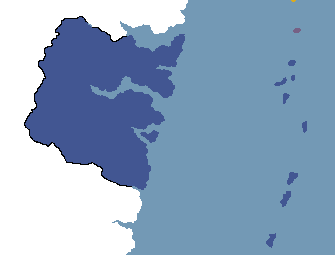
Got a revision for the borders of Maanbriak that I agreed on with Norgs. It should hopefully make it easier to create claims around it and help define nicer looking internal and external borders (no offence to the Bedford guy but the old ones were kind of an eyesore even without splitting the nation in two.
There will be no stat changes, only reappropriation of some lore which I have previously developed with Meagh for Durdanini. I hope that such lore, detailed in roleplays such as the one used for Durdanini’s expansion, will be sufficient to accommodate the modest enlargement of overall land.
Thanks,
SocDyl
Hello, cartography team!
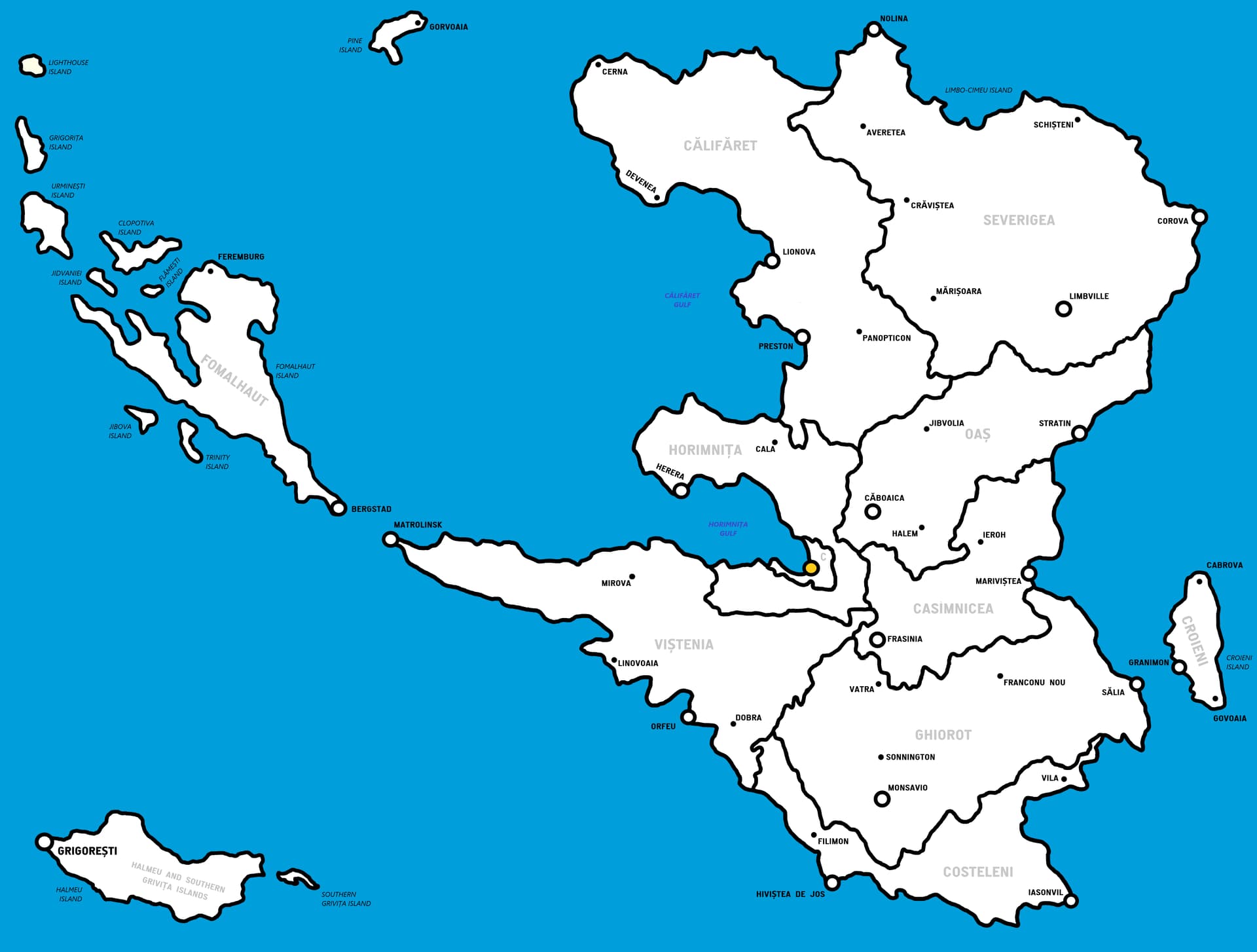
I just changed the names of the cities of Limbo (some were removed and others were added to replace them as well) and also there’s an expansion that happened and so yeah (here are the details of the expansion).
The text in italic represent the name of the islands and the text in bolded italic represents the gulfs. The text in grey represent the regions of Limbo, while the one in black the cities (Limbo City remains the same, I just noticed I forgot to add it on the map).
Hello there! There were some modifications done to Limbo’s stats, especially after the population change after my two recent expansions.
Population: 11,211,959 (+287,970)
New Currency Name: Limboese leu (LON)
Total GDP: LON 590.54 billion = ♅ 246.06 billion (same as before)
GDP per Capita: LON 52,670 = ♅ 21,945 (decreased)
SDI: 0.766 (decreased)
Afternoon y’all, as discussed in the discord help ticket #215, I would like to request Nystatiszna’s status to up dated to the following.
OLD STATS:
GDP: 12,345,000,000
POP: 15,000,000
Per Capita: 823
NEW STAT INCREASE:
GDP: 200,000,000,000 (increase of 1,519.9%)
POP: 25,000,000 (increase of 33.33%)
Per Capita: 8,000
Hey cartos, Korćetta’s climate has changed considerably since it’s formation around 4 years ago. I would like to request an update to it’s population:
20,752,678 → 40,752,678
This will also result in a change in GDP:
830,107,120,000 → 1,630,107,120,000
Hello,
Below Morsa Lake in Staynes there are a few cities. Can they be appropriately renamed:
Candle Abbot → Welberum
Buckridge → Wefterhöe
Maresley → Sonderhöe
Woolston → Eÿrem
Hobsmister → Geiftrup
Please can you also rename a city in south Staynes that borders whitespace:
Citadel Uspria → Blÿdum
And can you add a small city marker somewhere in the bottom right of Lake Morsa called Norderbÿll.
These are the ancient cities of Alberia which the Imperial Kingdom of Morstaybishlia annexed in the Great War.
Vielen Dank!
Vote accepted by 6-1-0 on 27-06-2025, yeehaw
Afternoon,
I would like to retcon a territory of Great Morstaybishlia into the control of Imperial Ethalria, which would come under TR Ethalria and then under the modern jurisdiction of the Ribenstadt Federation. This territory is currently “Neptentia Islands”.
Neptentia Islands → Ödinseln (literally “Desolate Islands”)
Glorenhafen → Düsterhafen (düster is an archaic german word meaning gloomy, so it is literally “gloomy harbour”)
And a new town on the top left island called “Windwacht” (literally “wind watch”)
I have attached an xcf. Many thanks!
Odinseln.xcf (5.0 KB)
Afternoon (x2),
Can this Morstaybishlian Overseas Territory, called Andomi, within the Axdelian Indigo Islands be represented on the map as either 1 or 2 pixels please, and labelled “Andomi (MBE)”. It was created (with Pagi’s consent ofc) before we made the 6.34126 km² per pixel map, so the map was not clear enough to see it on the 50 km² per pixel map.
Danke.
Hello cartos,
Strazsko has undergone some changed in it’s history, mainly there was never a violent revolution that destroyed the nation’s economy and government. Because of this I would like to change Strazsko’s GDP stats.
Per Capita: $1,200 → $33,039
GDP: $4,154,247,600 → $114,376,822,047
Thank you!
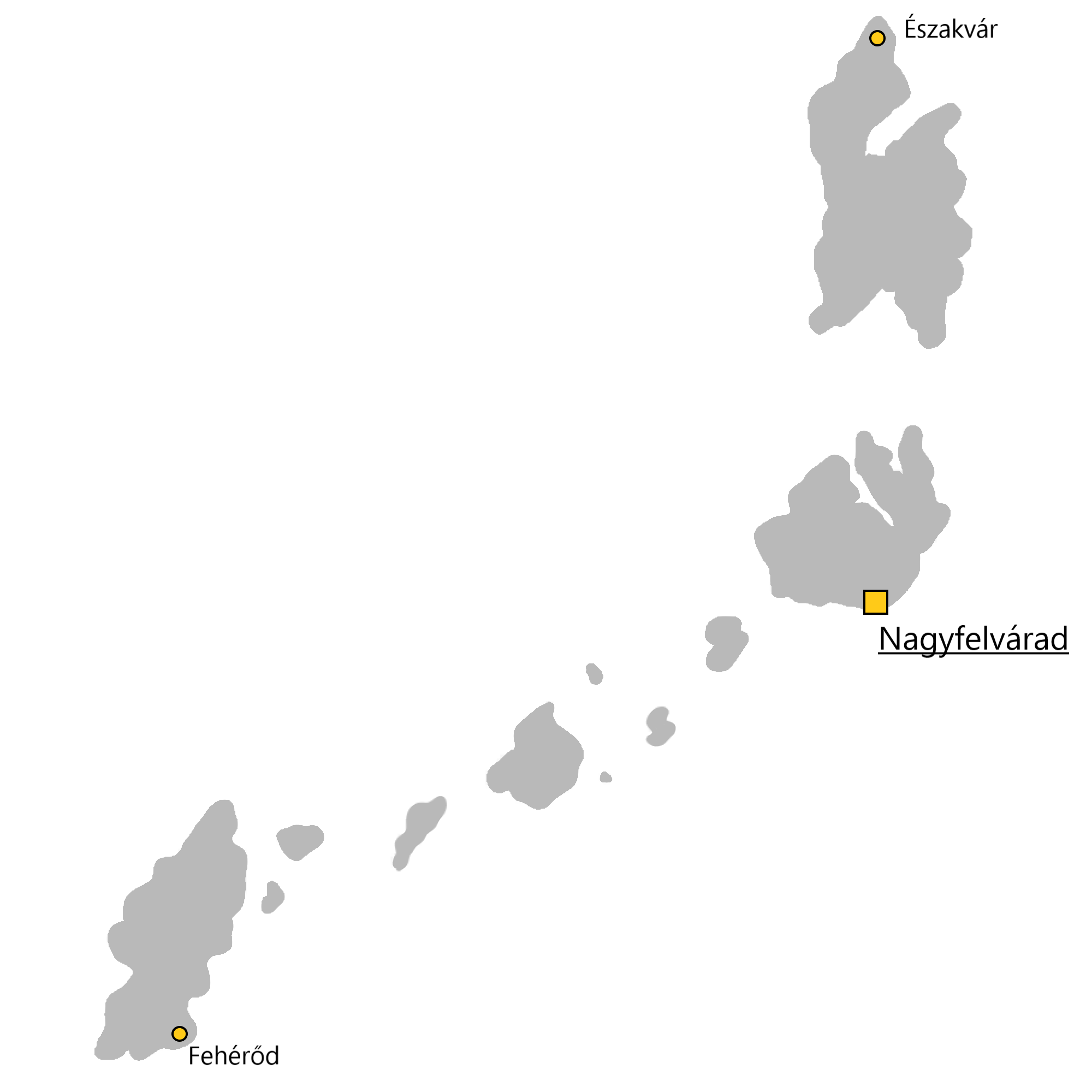
Cities in Sigeta (for the cartographers):
Text:
Északvár (lit. “North Castle”)
Nagyfelvárad (capital; lit. “Big Castle”)
Fehérőd (lit. “White Citadel/City”)
Hello Cartos!
So, I want to do a complete overhaul of my nation Kuduk: stats, government, history (at least its more recent history), pretty much everything minus its borders! Here is a short summary of its new history (I also have permission from Norgs and Luna to make these changes!):
New Kuduk History - Google Docs (These historical changes aren’t necessarily set in stone, but this is a general overview of what I want to change about Kuduk’s history!)
Here are the stat changes I want to make to Kuduk:
GDP Total: 54,000,000,000
GDP per capita: 18,000
Population: 3,000,000
Government-wise, Kuduk in the modern day will be a presidential republic.
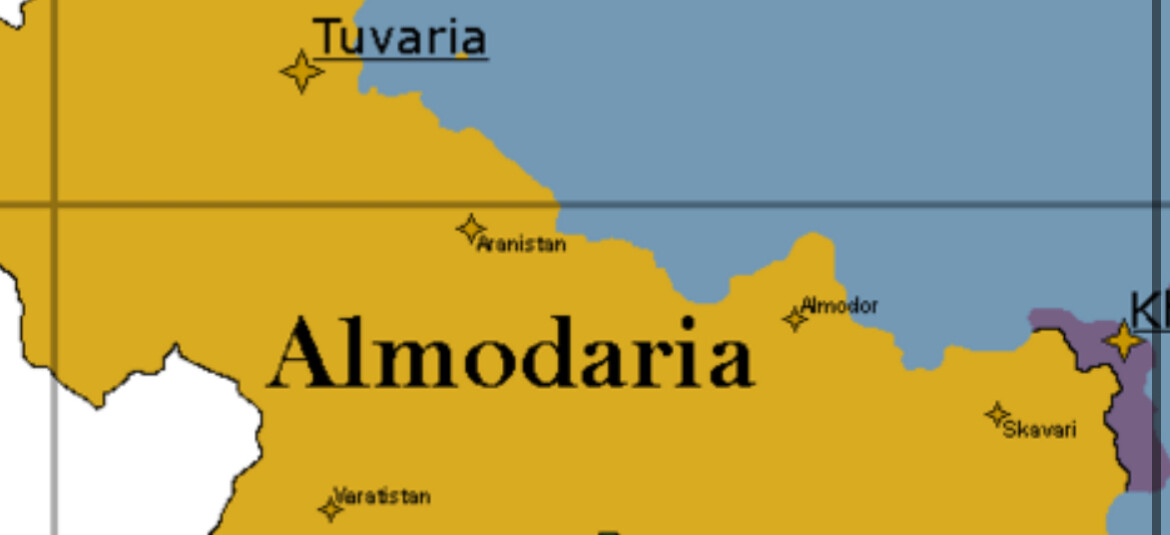
For my map change request, I would like for Almodaria to be renamed to “Aledonia”, and for the five states to have the following names:
Tuvaria will be Northcrest
Aranistan will be Ironwood
Almodor will be Azalea
Skavari will be Grandblue
And Varatistan will be White Sands
Side note: ectal in the discord will become a co-leader in this rebrand.
Hello Carto Friendos,
I deleted a previous map request because it was erroneous in assuming my prior countries were not adopted. Please see this new map change request, which seeks to replace the Tavari Union with a new NPC country. I have spoken with SocDyl, Tuva, Dead, Ian, Tret, Ark, and Cowlass about their lore interrelations with Tavaris and they have given their approval for the lore below. Sakarna’s UCA membership will need to be determined by vote.
In addition to relocating, shrinking, and renaming Tavaris, this map change request eliminates the Danvreas, the Ni-Raos, Racatrazi, the formerly Tavari portion of the island Rodoka, the former Tavari Union territories of Metrati Anar and the Avtovati Isles and, because there will no longer be a Tavari conlang, with the permission of the holders of the countries, it renames the former Tavari colonies that are remaining on the map. The request to remove Danvreas and the Ni-Raos is made based on the assumption that they are ownerless countries but that I as original creator can request my work be taken off the map.
Please note the name changes for Metradan (now Nyimisa) and its cities, Elatana (now Sharsa) and its cities, and the city of Ilarís (now Yachidrong) in the UFC. No changes are made to Rodoka and the Isles.
Tavari Replacement Protocol.xcf (7.4 MB)
Flag:
Nation Name (long): Kingdom of Sakarna
Nation Name (short): Sakarna (ས་དཀར་ནག)
Capitol: Ri-Teng
Largest City: Ngawang
Demonym: Sakarnese
Language: Sakarnese (Tibetan)
Species: 71% Orc, 8% Kemonomimi, 6% Lutryne, 6% Human, 5% Elf, 4% All Others
Population: 49,203,598
Area: 149,995.92 sq km (23,393 px)
Government type: Unitary parliamentary constitutional democracy
Leader(s): King Palchen V, Prime Minister Pochen Bowang
Legislature: Tsogdu (National Assembly)
Formation: Kingdom established in 1304 CE, constitutional monarchy established in 1793, decolonization effected 1917-1920
Total GDP: $1,143,983,653,500
GDP per capita: $23,250
Currency: Sakarnese tangka (SKT), pegged at 1 SKT = 0.0208 SHD or 1 SHD = 48 SKT
Calling Code: +42
ISO 3166 code: SAK
Internet TLD: .sak
Historical Summary:
The Kingdom of Sakarna (from sadkarnag, meaning roughly “land of black and white,”) consists of two islands, Sakar (the larger) and Sanag (the smaller). Sakarnese-speaking peoples of various species are believed to have first begun arriving on the islands from the Gondwanan mainland around the year 500 BCE. Prior to this, there were small populations of lutrynes along the coasts, especially on Sanag. Shortly after this migration began, a group of elven Sakarnese speakers separated and migrated further westward, later giving rise to the Xuhari people of Sayyed and Crimpateia, leaving behind a predominately orcish population on the islands. Early Sakarnese society was heavily clan-based, which by the turn of the fourth century CE had shifted into a system of mostly elective (but some hereditary) petty kingships. By the ninth century CE, the most powerful of these was Ri-Teng, which began to extract tributary payments from surrounding city-states. By 1150 CE, Ri-Teng had unified the island of Sakar either through outright martial conquest or economic domination.
The island of Sanag, while also Sakarnese-speaking, fiercely resisted Ri-Teng’s control, violently resisting attempted raids and invasions for nearly two centuries. King Ngawang of Ri-Teng personally led a campaign to Sanag in 1303, culminating with his eventual victory over the King of Tawari the following year. He became King Ngawang the Great, the first King of All Sakarna, and with the booty he plundered from the gold-wealthy kings of Sanag, he built a new port city on Sakar that still today bears his name. Since the 15th century, Ngawang has been the largest city in Sakarna, and while it has also been the country’s economic center for most of that time, it has also always been rife with extreme poverty and has long been known as a “rough port” in terms of criminality.
The highly patrimonial Sakarnese culture, combined with a relatively large number of nobles descended from ancient kingships and chiefdoms, meant the Kings of All Sakarna owed much of their support to their ability to pay off their numerous friends and especially their enemies. As such, for centuries, the Kingdom of Sakarna pursued aggressive campaigns of naval raids and outright conquests of neighbors in the region, seeking to refill the Kingdom’s seemingly never-full-enough treasury. The Pivnich peoples of now Ekvatora in the 16th century, the Rodokans and the Cescolians in the 17th, and the Balistrians and the Yachi and Zapolese peoples of what is now the Union of Free Cities in the 18th century all faced the brunt of Sakarnese military conquests that sought to establish wealth-generating colonies for Sakarna all across the world. Sakarna also fought a series of wars with Bana throughout the 17th and 18th centuries, leading to a long-running, bitter rivalry between the two countries.
Throughout the 19th century, however, the Sakarnese war machine gradually lost steam. The Sakarnese colonies in Arcturia were enormously expensive and ultimately produced little net profit, especially considering that efforts in Arcturia depended on Alkari and Valerijkian business interests who also demanded their cut. Across the Sakarnese colonial sphere, workers began to chafe at oppressive work conditions that were unregulated by a government firmly in the pocket of the wealthy development interests who bankrolled the monarchy. Sakarnese attempts to outright conquer all of Cescolia, an established Novaran country that was older than Sakarna, were initially almost successful in the first Sakarnese-Cescolian War in the 1740s, but many of those gains were lost in the Second Sakarnese-Cescolian War of the 1820s. Sectarian conflict between Cescolian and Sakarnese peoples in Novaris did not cease with the war’s end, and has continued even into the present day. Sakarnese efforts to expand its economic dominance in the Gondwana Straits War were also unsuccessful and ultimately detrimental to the country’s military reputation and effectiveness.
By the end of the 19th century, Sakarna was in a full-blown economic and political crisis, which forced the King in 1895 to enact a series of labor reforms that were enormously unpopular among the wealthy business elite but which managed to quell most of the unrest for a few years. When labor riots kicked back up again after the turn of the century, however, the wealthy business interests instead colluded to assassinate the King and establish a Republic of Sakarna in 1901. This short-lived government was dominated by a cadre of far-right nationalists who, in seeking to establish a new era of Sakarnese military might, declared war on Asendavia in 1908 and launched an invasion of Vaklori. The Banians joined the effort on the Asendavian side, invading and seizing Sakarna’s Ekvatori island holdings. During the course of this campaign, more or less the entirety of the Sakarnese navy was destroyed, as it was based almost entirely in the Ekvatori isles. Ekvatora declared independence in 1915 with Banian assistance, and Sakarna was expelled from the archipelago.
Left absolutely destitute and literally without the means to supply the territories, Sakarna summarily “disclaimed” its Arcturian holdings Sharsa and Yachisa in 1908, revoking the citizenship of millions of people overnight and leaving many of them stateless. After the Great War’s end in 1917, Sakarna initially tried to resume the administration of its Novaran territories, but concerted non-violent Rodokan resistance, not to mention the resistance in Nyimisa on the mainland, which in contrast was brutally violent, led to the negotiated independence of these colonies in 1918 and 1920, respectively.
The Kingdom of Sakarna was formally re-established in 1920, though it had been operating as the de facto government since 1916, and had claimed to exist in exile from 1910. According to terms strictly imposed by Asendavia and Bana under the threat of gunpoint, Sakarna officially renounced the right to declare war and operate a military. While this was enormously unpopular, constitutional reforms to the monarchy and the establishment of genuine democracy proved very popular and led to steady economic improvement throughout the early 20th century. By the 1970s, however, the economy had become essentially one massive real estate bubble that popped in 1975 due to pressures caused by excessive investments in Auroran real estate that had been obliterated by Kevatuul, wiping out the Sakarnese Stock Exchange and cratering the value of the Sakarnese tangka. Two decades of economic depression and stagnation followed.
At the turn of the 21st century, Sakarnese neoliberals began two projects with the aim to increase government cash flows: they systematically privatized almost every state-owned asset, including the airlines, power utilities, trains, and telecommunications, and they expanded efforts to establish a domestic military-industrial complex, which they hoped would form the basis for a new manufacturing economy. The highly controversial repeal of the constitutional prohibition on a military was completed in 2002. In 2003, Sakarna unexpectedly and controversially declared its support for George Gray in the Volscine Civil War and joined the conflict. The Sakarnese military was generally unprepared, ineffective at best, and suffering multiple major defeats at worst.
In 2020, Sakarna entered into a comprehensive defensive partnership with Vistaraland. Also in 2020, Sakarna finally formally ceded its claim on the southernmost four islands of Ekvatora, in an unsuccessful effort to kickstart closer ties with Ekvatora and Novaris. Later, however, Sakarna saw a degree of success in Novaran foreign policy, generating a degree of goodwill with assisting in the LN intervention in Correva and entering into a formal partnership with the Tolinsk Accords.
Despite high hopes early this century, economic growth in Sakarna has remained unimpressive, and Sakarna continues to lag behind neighboring developed countries in most economic indicators. Factors inhibiting further growth in Sakarna include high levels of corruption in the public and private sectors, a severe lack of funding for infrastructure improvements, and especially, poorly kept transportation and telecommunications systems. However, the country is relatively rich in certain high value minerals, such as cobalt and lithium, and it is a leading global producer of cocoa and coffee. Since 2020, the country has placed a high emphasis on growing the tourism industry.
I have a few locations I’d like to be added to my nations
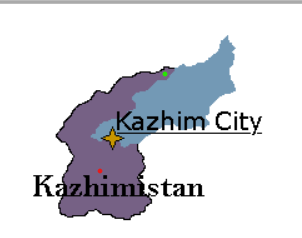
In Kazhimistan, I’d like for two new Towns to be added. The green dot I’d like to be called Kazhir, and the red dot I’d like to be called Ghwahali.
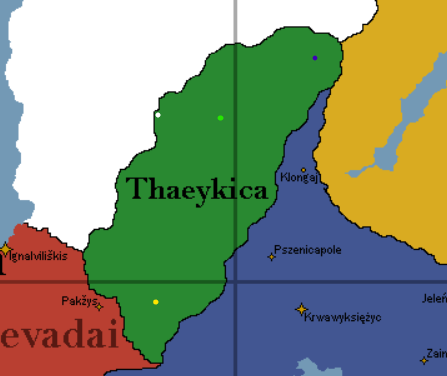
In Thaeykica I’d like for the Green dot to be the Capital, called Thaeykica or Kiktheyuik Thaeykica, the yellow dot I’d like to be the Metropolis of Itsadril or Kiktheyuik Itsadril, the white dot I’d like to be the Small City of Jaks or Theyuik Jaks, and the blue dot I’d like to be the city of Kikst or Kiktheyuik Kikst.
Thank you for all your hard work!
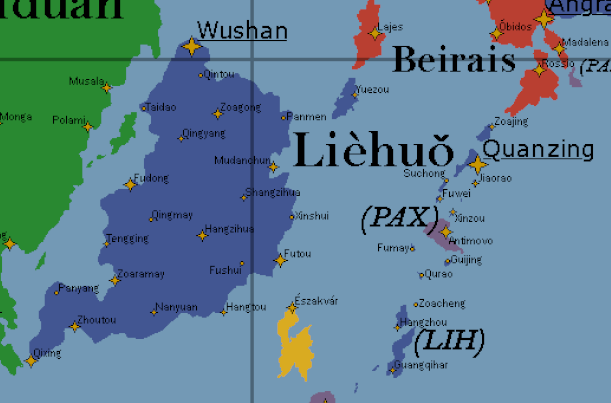
Hello Cartos,
I would like to move Liehuo because I no longer believe that it fits with Novaris lore and believe that this new area would be better for it’s lore. Stats will all remain the same.
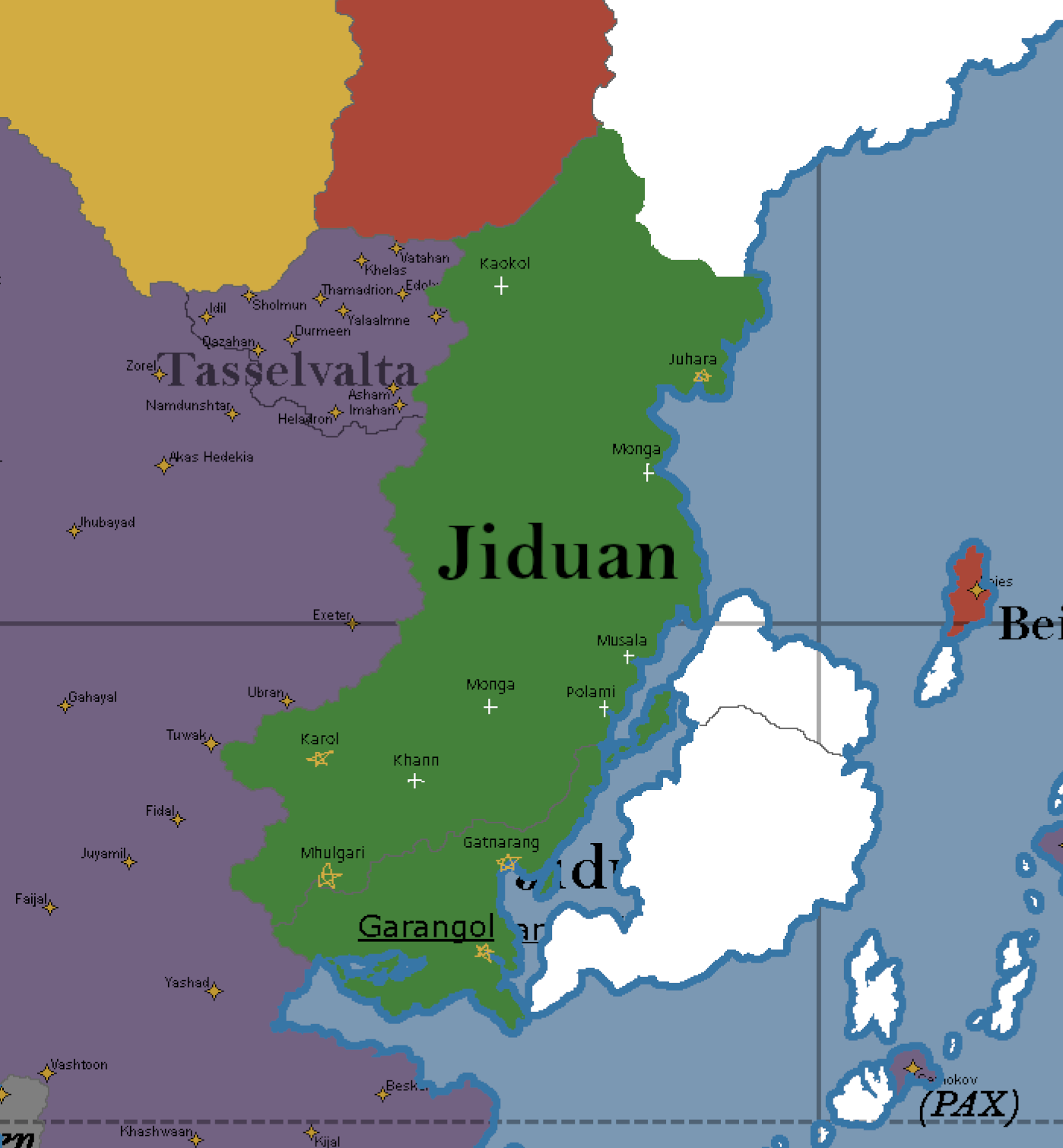
Hello Cartos! This is part of the ticket change-228!
The shape of Jiduan has been bothering me for a while. Back when I claimed the nation, I wanted to make it as densely populated as I could just as a fun project, but I’ve since drifted from that idea and would now rather prefer a shape for the country that can better serve its lore with Packilvania, and also that allows other countries to claim the area without creating strange borders. To be clear, I don’t want to change any of Jiduan’s stats at all, just its shape!
The Yellow stars are the biggest cities in Jiduan (with the capital staying in the same location with the same name). The white stars are the second largest cities in Jiduan.
please remove Istranta
Hello! I just forgot to mention that Limbo City is no longer Limbo City but the City of Corinești (or simply Corinești).
That is all!